Tuesday, May 28, 2013
Approaching the Wonderment of Bel Canto
Because it is passed from teacher to student in such intimate and personal disciplines, Bel Canto is and always will be a mysterious, almost secret art. Many attempts have been made to explain the greatness of Bel Canto, and none have been truly adequate.
I liken it to the old parable about the group of blind men who were introduced to an elephant for the first time, and then they were asked to explain to others what an elephant was. The first blind man approached the elephant from its side and touched the animal’s large body with tough skin. He reported that an elephant is like a house. The second blind man felt one of the elephant’s legs and said: "It is a tree." The third blind man found the elephant’s tail and claimed that an elephant was a rope. The fourth blind man ran his hands up and down the elephants tusks– a spear! And the last blind man caught hold of the animal’s trunk and proclaimed that an elephant is a hosepipe. All of the men had good reason for their explanations, but none of them could fully comprehend all there was to know about an elephant.
So it is with the wonderment of Bel Canto. Various teachers and even accomplished Bel Canto singers have written about their understanding of Bel Canto as an art. In each book or article it is fairly easy to see that every person has managed to find something of themselves inside the art of Bel Canto, and they share that part of themselves as part and parcel of their respective definitions of "Bel Canto."
It was the same for me when I was a young lad studying Bel Canto with my teacher Julian Miller. I meditated continually about the work we were doing to clear away my vocal difficulties. I strove for consistency to be able to sing with the ease and clarity and well-pronounced phrases I was learning. I wanted to find a way to keep hold of those skills throughout my career without ever straying from the true meaning of Bel Canto.
And finally I found my answer within myself. I discovered I could get hold of all of the phrasing, inflection and precision inherent in Bel Canto singing and integrate them with ease as soon as I realized that singing Bel Canto was all about telling the story.


Monday, November 27, 2006
Italo Cristalli (1879-1932)

Cristalli enjoyed a substantial international career for many years. He was successful as a verismo singer, with a distinct sense of style, clarity and command in his voice. He was one of the few Italian singers who had a voice for the works of Wagner. He performed throughout Italy and in 1911 he joined Pietro Mascagni for a series of concerts in South America. He came to the United States and sang with the Metropolitan Opera of New York from 1913 to 1914.
During his year with The Met Cristalli was one of the few tenors who had the honor of singing with the great conductor Toscanini, the other tenors being Enrico Caruso and Giovanni Martinelli. He sang tenor in an opening act preceding Caruso’s performance on several nights, including his last performance with The Met in Atlanta, Georgia on May 2, 1914.
By the mid-1920's Cristalli returned to his home town of Piacenza and only gave performances in smaller, out-of-the-way locations. He died at the early age of 52.
Italo Cristalli was the singing teacher of Julian Miller.
Sunday, November 26, 2006
Corrado Pavesi-Negri (1843-1920)
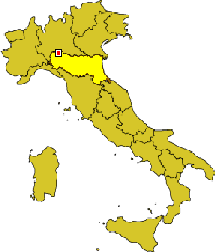 Singer-composer Corrado Pavesi-Negri brought a wealth of life experience to his art. He had studied jurisprudence at the University of Parma and he also fought in the wars of Italian independence. He had a talent for learning different languages and he traveled a great deal in Europe.
Pavesi-Negri studied music and singing with Giovanni Quacquerini, Giovanni Rossi and Amilcare Ponchielli. He was made a master composer in the Academia Filarmonica of Bologna in 1877, and he wrote and published a biography of singer Rosmunda Pisaroni.
Pavesi-Negri lived in Florence, Italy for 36 years, where he concentrated his efforts as a singing teacher, producing some of the more accomplished students of his day, including Italo Cristalli, Angelo Masini, Amedeo Bassi, Enrico Ventura and Nunzio Rapisardi. Pavesi-Negri himself was also known to be a fine baritone singer who gave some beautiful performances during his lifetime.
Eventually he retired to his hometown of Piacenza, Italy, where he was a great support to the Musical High School there. He left his entire library to them after his death.
Subscribe to:
Posts (Atom)