Of all the great singers of the Bel Canto genre, Irish Tenor John McCormack was the most versatile. He made his operatic debut at Savona in 1906 and continued to dazzle audiences throughout the world until emphysema rendered him unable to perform in 1943.
The great Polish tenor Jean de Reske had been McCormack’s predecessor as the dominant singer on the international scene. De Reske attended all of McCormack’s appearances at Monte Carlo during 1921 and 1923, and even invited the Irishman to his own villa to sing to his pupils. After McCormack obliged the gathering with a private performance Jean de Reske told his pupils: "That is how I want you to sing." He followed the meeting with a warm letter praising McCormack’s greatness as a singer, saying:
"YOU ARE THE TRUE REDEEMER OF BEL CANTO."
Though McCormack pronounced his words clearly as he told the story of each song, he didn’t imitate any other singer or try to sound like an Italian. Some university teachers might tell you that learning to sing Bel Canto means to "purify" your pronunciation of vowels so that you sound exactly like a certain Italian way of speaking. Those teachers are mistaken.
Jean de Reske had the experience and knowledge to recognize that the very Irish sounding Irishman John McCormack sang with VOCAL FREEDOM and that he made his performances about the storytelling, not tones and sounds. He personalized himself for the audience in a magical way. That’s what made McCormack the "Redeemer of Bel Canto."
Showing posts with label Bel Canto. Show all posts
Showing posts with label Bel Canto. Show all posts
Monday, August 03, 2015
Monday, July 20, 2015
Learning Bel Canto in Individual Sessions
One of the greatest joys that I have as a teacher is the time that I spend with my students in their individual singing classes. After over thirty-five years I have never grown weary of working with one person after another, because each person has a wonderful gift inside of himself or herself which will come out in singing.
All kinds of people ring the school for lessons, all ages from 12 to 90. Some of the people are established performers and some of them simply always wanted to learn about singing but were afraid to ask. When I start seeing them getting results in their singing ability and they see it too, then that’s the big payback for me. I am truly blessed to have a mission and work in life that makes me very happy.
Someone once asked me if I ever get tired of hearing the same songs over and over again. I replied without hesitation: "Absolutely not." There is something in a song for EVERY individual that is uniquely and only there for them alone.
The singer is the one who brings something to the song. I can always hear something new in a song that I have heard thousands and thousands of times just because a new person is now singing that song. This is true whether the student is a beginner or whether the student has been singing all of his or her life. It is an inherent part of being human. Your art is within you waiting to come out, even before you discover that it exists
All kinds of people ring the school for lessons, all ages from 12 to 90. Some of the people are established performers and some of them simply always wanted to learn about singing but were afraid to ask. When I start seeing them getting results in their singing ability and they see it too, then that’s the big payback for me. I am truly blessed to have a mission and work in life that makes me very happy.
Someone once asked me if I ever get tired of hearing the same songs over and over again. I replied without hesitation: "Absolutely not." There is something in a song for EVERY individual that is uniquely and only there for them alone.
The singer is the one who brings something to the song. I can always hear something new in a song that I have heard thousands and thousands of times just because a new person is now singing that song. This is true whether the student is a beginner or whether the student has been singing all of his or her life. It is an inherent part of being human. Your art is within you waiting to come out, even before you discover that it exists
Monday, July 06, 2015
"The Art That Conceals Art":
I love this quotation from an old Dublin Grand Opera Society program:
Ernestine Schumann-Heink (1862-1936) described [McCormack] on many occasions as the greatest singer of his time, and she had heard all the great singers over her career of more than 60 years.
Author and critic Ernest Newman in the London Sunday Times wrote a week after McCormack’s death: "He was a supreme example of the art that conceals art, and sheer hard work that becomes manifest only in its results, not in the revolving of the machinery that has produced them."
(Taken from "John McCormack– a Centenary Tribute" from a program of the Dublin Grand Opera Society, Spring Season 1984, at the Olympia Theatre, Dublin)
Monday, June 22, 2015
“What Bel Canto Means To Me...” (By John McCormack’s heir)
In an e-mail letter to me dated October 15, 2003, Count John McCormack, heir and grandson of Irish Tenor John McCormack writes:
Bel Canto speaks for itself – beautiful singing – and one of its greatest exponents was my grandfather, Count John McCormack.... The secret to Bel Canto, some say, lies in the continuity of tone and the art of sustaining passages to create a beautiful line. John was an expert at delivery, phrasing and had uncanny breathing ability, quite often leaving his audience gasping while he sailed effortlessly on.
The sheer simplicity behind the theory of allowing a voice to develop in its own individual and distinctive way could well be learned and understood by many modern singers who force their way through songs while desperately attempting to sound like their favourite singer. Why do we spend so much of our lives trying to be someone else when what we have is so divinely unique?
It gives me great pleasure to know that the tradition of Bel Canto is continued with success through the Bel Canto House in Dublin. My grandfather’s legacy will remain and the lessons that can still be learned from listening to his mastery will, hopefully, continue to be of benefit to hundreds of future students.


Monday, June 08, 2015
Frank Merriman (1941- a long, time in the future...)
I learned Bel Canto from my teacher Julian Miller in the traditional and conventional way, with an emphasis on clarity of pronunciation, especially the vowels, and endless hours working on classical arias.
I realized through our work together that the singers who made the most enduring impact on the singing world through their artistry were the ones who focused all of their efforts on telling the story of the song. The true essence of the expressive Bel Canto artistry in singers like Jean de Reske, John McCormack, Zinka Millanov and Jussi Bjorling came from storytelling.
Telling the story was what allowed them to use their voices effortlessly in the most beautiful, powerful and natural way. I made sure to tell the story every time I opened my mouth to sing.
I began teaching singing because my co-performers in the opera company in Duesseldorf, Germany started asking me to help them improve their performances. When I eventually realized that over half the entire opera company was coming to my flat for singing lessons I decided that the life of a full-time teacher was the life I was born for. I taught in Germany for a while and then for several years in London.
When I came back to Dublin to teach singing in the year 1983 I expanded my teaching base to include not only classical singers, but also singers from other styles of music such as Irish folk singers, pop singers, showband singers and rock and roll singers. I revolutionized the Bel Canto tradition by taking it out of the opera house and putting it into the hands (and voices) of all Irish singers. Thus a new singing tradition, unique to Ireland, was born: "Bel Canto Storytelling."
In 1987 I purchased a historic Georgian building on North Great Georges Street in Dublin as a permanent home for the Bel Canto House School of Singing. It truly is the home of "beautiful singing" where singers of all styles, whether beginners or experienced performers, have a positive environment to work towards VOCAL FREEDOM.
I have been the singing teacher of hundreds and hundreds of students, including Sinead O’Connor, Heidi Talbot, Leslie Dowdall, Christy Digman and most importantly my associate teacher Edwin Williamson.
I realized through our work together that the singers who made the most enduring impact on the singing world through their artistry were the ones who focused all of their efforts on telling the story of the song. The true essence of the expressive Bel Canto artistry in singers like Jean de Reske, John McCormack, Zinka Millanov and Jussi Bjorling came from storytelling.
Telling the story was what allowed them to use their voices effortlessly in the most beautiful, powerful and natural way. I made sure to tell the story every time I opened my mouth to sing.
I began teaching singing because my co-performers in the opera company in Duesseldorf, Germany started asking me to help them improve their performances. When I eventually realized that over half the entire opera company was coming to my flat for singing lessons I decided that the life of a full-time teacher was the life I was born for. I taught in Germany for a while and then for several years in London.
When I came back to Dublin to teach singing in the year 1983 I expanded my teaching base to include not only classical singers, but also singers from other styles of music such as Irish folk singers, pop singers, showband singers and rock and roll singers. I revolutionized the Bel Canto tradition by taking it out of the opera house and putting it into the hands (and voices) of all Irish singers. Thus a new singing tradition, unique to Ireland, was born: "Bel Canto Storytelling."
In 1987 I purchased a historic Georgian building on North Great Georges Street in Dublin as a permanent home for the Bel Canto House School of Singing. It truly is the home of "beautiful singing" where singers of all styles, whether beginners or experienced performers, have a positive environment to work towards VOCAL FREEDOM.
I have been the singing teacher of hundreds and hundreds of students, including Sinead O’Connor, Heidi Talbot, Leslie Dowdall, Christy Digman and most importantly my associate teacher Edwin Williamson.
Monday, November 27, 2006
Italo Cristalli (1879-1932)

Cristalli enjoyed a substantial international career for many years. He was successful as a verismo singer, with a distinct sense of style, clarity and command in his voice. He was one of the few Italian singers who had a voice for the works of Wagner. He performed throughout Italy and in 1911 he joined Pietro Mascagni for a series of concerts in South America. He came to the United States and sang with the Metropolitan Opera of New York from 1913 to 1914.
During his year with The Met Cristalli was one of the few tenors who had the honor of singing with the great conductor Toscanini, the other tenors being Enrico Caruso and Giovanni Martinelli. He sang tenor in an opening act preceding Caruso’s performance on several nights, including his last performance with The Met in Atlanta, Georgia on May 2, 1914.
By the mid-1920's Cristalli returned to his home town of Piacenza and only gave performances in smaller, out-of-the-way locations. He died at the early age of 52.
Italo Cristalli was the singing teacher of Julian Miller.
Sunday, November 26, 2006
Corrado Pavesi-Negri (1843-1920)
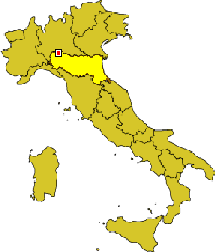 Singer-composer Corrado Pavesi-Negri brought a wealth of life experience to his art. He had studied jurisprudence at the University of Parma and he also fought in the wars of Italian independence. He had a talent for learning different languages and he traveled a great deal in Europe.
Pavesi-Negri studied music and singing with Giovanni Quacquerini, Giovanni Rossi and Amilcare Ponchielli. He was made a master composer in the Academia Filarmonica of Bologna in 1877, and he wrote and published a biography of singer Rosmunda Pisaroni.
Pavesi-Negri lived in Florence, Italy for 36 years, where he concentrated his efforts as a singing teacher, producing some of the more accomplished students of his day, including Italo Cristalli, Angelo Masini, Amedeo Bassi, Enrico Ventura and Nunzio Rapisardi. Pavesi-Negri himself was also known to be a fine baritone singer who gave some beautiful performances during his lifetime.
Eventually he retired to his hometown of Piacenza, Italy, where he was a great support to the Musical High School there. He left his entire library to them after his death.
Saturday, November 25, 2006
Amilcare Ponchielli (1834-1886)

Ponchielli suffered in his early career because he was ill-equipped to negotiate the politically driven, back-biting world of the established music societies of his day and the wealthy bourgeoisie which controlled them. For a time he was forced to take whatever work he could find, taking jobs such as band leader in Piacenza and in Cremona. He was known among his peers to be a man of absolute honesty and moral rectitude. He believed that success in any musical career should be based solely on true ability and professionalism and a true love of the art.
Ponchielli was known to feel strongly against any pressure from the impresario who employed him to make his compositions too complicated. He was a proponent of simple, straightforward melody and clarity that was not bogged down in confusion. He was a contemporary of Giuseppi Verdi, who mourned the occasion of Ponchielli’s death, saying the world has lost "a worthy man and a most distinguished artist."
Amilcare Ponchielli was the teacher of Giacomo Puccini, Pietro Mascagni and Corrado Pavesi-Negri.
Thursday, November 16, 2006
How My Singing School Follows McCormack’s Bel Canto Tradition

Subscribe to:
Posts (Atom)