Most people mistakenly believe that singing is a daunting technical and complicated task that only highly trained and educated persons can master. Nothing could be further from the truth, and the first thing that I do with new students in my singing school is to break them from that mythology.
For example, a middle-aged man from the town of Clare had always been interested in singing, and he set an appointment for me to give an assessment of his voice at the Bel Canto House School of Singing. When he sat down with me in my studio I asked him what he was expecting for me as a singing teacher to do at the first meeting. He answered matter-of-factly: "Well, I expect you’ve got a magnifying glass of some kind here in your office so that you can have a look down my throat there, and that will let us know whether or not I can sing!"
Of course, I didn’t look down the fellow’s throat at all! I asked him to sing a little bit of what was in his heart and we used that as the foundation of our work together. The human voice is a mystery and you will best be able to USE your voice when you embrace the mysteriousness of it, rather than trying to cut it up into little pieces that can be explained away.
Showing posts with label Singing Teachers. Show all posts
Showing posts with label Singing Teachers. Show all posts
Monday, October 12, 2015
Monday, September 28, 2015
Singing– Not Surgery!
The best way to learn singing is to follow the traditions of the great singing teachers of history. Arguably the greatest teacher to have an impact on the art of singing was Manuel Garcia II (1805-1906). The important thing about Garcia was not just his knowledge, but how he used his knowledge. His emphasis was always upon artistry and expression, not technicalities.
In my initial assessment meetings with new singing students, I like to show them the following quotation from page 956 of Percy Scholes’ The Oxford Companion to Music, Tenth Edition:
In my initial assessment meetings with new singing students, I like to show them the following quotation from page 956 of Percy Scholes’ The Oxford Companion to Music, Tenth Edition:
Most of the great singing teachers say that the less you know about the physiology of singing the better. Santley wrote (in The Art of Singing): ‘Manuel Garcia is held up as the pioneer of scientific teachers of singing. He was– but he taught singing, not surgery! I was a pupil of his in 1858, and a friend of his while he lived [to 1906], and in all the conversation I had with him I never heard him say a word about larynx or pharynx, glottis, or other organ used in the production and emission of the voice.”Singing should never be a burden. It should always be a joy!
Monday, August 17, 2015
Frail Bodies, Strong Singers at Any Age
These days you rarely hear singers who sing with true VOCAL FREEDOM in the commercial arena. Instead you hear singers who blast and push and force their voices for years until they have finally done so much damage to their voices they are forced into retirement, never to return to the stage.
This is not so with singers who studied carefully to achieve VOCAL FREEDOM in the Bel Canto way of singing. When asked to sing publicly years after their retirement from professional life in their frail and elder years they can sing yet with great majesty and expressiveness. Their health may be leaving them, but their ability to sing comes from their depth of spirit, which is as strong as ever!
My associate teacher in the Bel Canto House School of Singing Edwin Williamson had the great honor of visiting Anna-Lisa Bjorling, the widow of Jussi Bjorling, at her home in the year 1994. She showed him the room which Jussi kept aside for his singing, which contained the various regalia, medals, certificates and other mementos that been awarded to him by the presidents and royalty in the countries where he had performed, and she told him of her memories of singing together with Jussi.
Then Edwin asked Mrs. Anna-Lisa Bjorling to sing for him. At first she was reluctant, saying "Oh, it’s been such a long time since I have sung..." But Edwin began to sing Puccini’s "O mio babino, caro" and she instantly joined in with him. Edwin is a witness to the fact that she sang perfectly well even though she had long since retired. This is an experience that Edwin will fondly carry in his memory for the rest of his life.
Another great Bel Canto singer named Tito Schipa made his operatic debut in Vercelli, Italy in 1909 at age twenty. He had an impressive career singing all over the world including the Met in New York City and in several films. He sang professionally for fifty-five years. Even in his seventies he was able to fill the great opera arenas with his tenor voice which was always subtle, light and fully expressive. The last concert he gave was in 1962 in New York. The critics at that concert gave wonderful accounts of his performance. Recordings of that concert are still in publication, and I recommend to you to get a copy and hear it for yourself.
The Croatian-born soprano Zinka Milanov enjoyed a certain degree of fame and success in her younger years, though her voice tended to be somewhat shrill. However, she did not fully come to maturity in her singing voice until she was in her forties. Her later work is a clear example of true VOCAL FREEDOM, and her wonderful interpretations of Verdi and Puccini roles earned her a place in history as one of the best dramatic sopranos of her day.
When she retired from The Met in 1966, Milanov took up teaching on a full-time basis. In an interview with Etude magazine in the early 1940's she said: "I love to sing for my students. I love to demonstrate for them." (She used her own voice when she taught– not the piano.) She also said that she loved to sing for her plants and her flowers. When asked what makes a singer great, she answered: "Those who work hardest at their art."
This is not so with singers who studied carefully to achieve VOCAL FREEDOM in the Bel Canto way of singing. When asked to sing publicly years after their retirement from professional life in their frail and elder years they can sing yet with great majesty and expressiveness. Their health may be leaving them, but their ability to sing comes from their depth of spirit, which is as strong as ever!
My associate teacher in the Bel Canto House School of Singing Edwin Williamson had the great honor of visiting Anna-Lisa Bjorling, the widow of Jussi Bjorling, at her home in the year 1994. She showed him the room which Jussi kept aside for his singing, which contained the various regalia, medals, certificates and other mementos that been awarded to him by the presidents and royalty in the countries where he had performed, and she told him of her memories of singing together with Jussi.
Then Edwin asked Mrs. Anna-Lisa Bjorling to sing for him. At first she was reluctant, saying "Oh, it’s been such a long time since I have sung..." But Edwin began to sing Puccini’s "O mio babino, caro" and she instantly joined in with him. Edwin is a witness to the fact that she sang perfectly well even though she had long since retired. This is an experience that Edwin will fondly carry in his memory for the rest of his life.
Another great Bel Canto singer named Tito Schipa made his operatic debut in Vercelli, Italy in 1909 at age twenty. He had an impressive career singing all over the world including the Met in New York City and in several films. He sang professionally for fifty-five years. Even in his seventies he was able to fill the great opera arenas with his tenor voice which was always subtle, light and fully expressive. The last concert he gave was in 1962 in New York. The critics at that concert gave wonderful accounts of his performance. Recordings of that concert are still in publication, and I recommend to you to get a copy and hear it for yourself.
The Croatian-born soprano Zinka Milanov enjoyed a certain degree of fame and success in her younger years, though her voice tended to be somewhat shrill. However, she did not fully come to maturity in her singing voice until she was in her forties. Her later work is a clear example of true VOCAL FREEDOM, and her wonderful interpretations of Verdi and Puccini roles earned her a place in history as one of the best dramatic sopranos of her day.
When she retired from The Met in 1966, Milanov took up teaching on a full-time basis. In an interview with Etude magazine in the early 1940's she said: "I love to sing for my students. I love to demonstrate for them." (She used her own voice when she taught– not the piano.) She also said that she loved to sing for her plants and her flowers. When asked what makes a singer great, she answered: "Those who work hardest at their art."
Monday, June 22, 2015
“What Bel Canto Means To Me...” (By John McCormack’s heir)
In an e-mail letter to me dated October 15, 2003, Count John McCormack, heir and grandson of Irish Tenor John McCormack writes:
Bel Canto speaks for itself – beautiful singing – and one of its greatest exponents was my grandfather, Count John McCormack.... The secret to Bel Canto, some say, lies in the continuity of tone and the art of sustaining passages to create a beautiful line. John was an expert at delivery, phrasing and had uncanny breathing ability, quite often leaving his audience gasping while he sailed effortlessly on.
The sheer simplicity behind the theory of allowing a voice to develop in its own individual and distinctive way could well be learned and understood by many modern singers who force their way through songs while desperately attempting to sound like their favourite singer. Why do we spend so much of our lives trying to be someone else when what we have is so divinely unique?
It gives me great pleasure to know that the tradition of Bel Canto is continued with success through the Bel Canto House in Dublin. My grandfather’s legacy will remain and the lessons that can still be learned from listening to his mastery will, hopefully, continue to be of benefit to hundreds of future students.


Monday, June 08, 2015
Frank Merriman (1941- a long, time in the future...)
I learned Bel Canto from my teacher Julian Miller in the traditional and conventional way, with an emphasis on clarity of pronunciation, especially the vowels, and endless hours working on classical arias.
I realized through our work together that the singers who made the most enduring impact on the singing world through their artistry were the ones who focused all of their efforts on telling the story of the song. The true essence of the expressive Bel Canto artistry in singers like Jean de Reske, John McCormack, Zinka Millanov and Jussi Bjorling came from storytelling.
Telling the story was what allowed them to use their voices effortlessly in the most beautiful, powerful and natural way. I made sure to tell the story every time I opened my mouth to sing.
I began teaching singing because my co-performers in the opera company in Duesseldorf, Germany started asking me to help them improve their performances. When I eventually realized that over half the entire opera company was coming to my flat for singing lessons I decided that the life of a full-time teacher was the life I was born for. I taught in Germany for a while and then for several years in London.
When I came back to Dublin to teach singing in the year 1983 I expanded my teaching base to include not only classical singers, but also singers from other styles of music such as Irish folk singers, pop singers, showband singers and rock and roll singers. I revolutionized the Bel Canto tradition by taking it out of the opera house and putting it into the hands (and voices) of all Irish singers. Thus a new singing tradition, unique to Ireland, was born: "Bel Canto Storytelling."
In 1987 I purchased a historic Georgian building on North Great Georges Street in Dublin as a permanent home for the Bel Canto House School of Singing. It truly is the home of "beautiful singing" where singers of all styles, whether beginners or experienced performers, have a positive environment to work towards VOCAL FREEDOM.
I have been the singing teacher of hundreds and hundreds of students, including Sinead O’Connor, Heidi Talbot, Leslie Dowdall, Christy Digman and most importantly my associate teacher Edwin Williamson.
I realized through our work together that the singers who made the most enduring impact on the singing world through their artistry were the ones who focused all of their efforts on telling the story of the song. The true essence of the expressive Bel Canto artistry in singers like Jean de Reske, John McCormack, Zinka Millanov and Jussi Bjorling came from storytelling.
Telling the story was what allowed them to use their voices effortlessly in the most beautiful, powerful and natural way. I made sure to tell the story every time I opened my mouth to sing.
I began teaching singing because my co-performers in the opera company in Duesseldorf, Germany started asking me to help them improve their performances. When I eventually realized that over half the entire opera company was coming to my flat for singing lessons I decided that the life of a full-time teacher was the life I was born for. I taught in Germany for a while and then for several years in London.
When I came back to Dublin to teach singing in the year 1983 I expanded my teaching base to include not only classical singers, but also singers from other styles of music such as Irish folk singers, pop singers, showband singers and rock and roll singers. I revolutionized the Bel Canto tradition by taking it out of the opera house and putting it into the hands (and voices) of all Irish singers. Thus a new singing tradition, unique to Ireland, was born: "Bel Canto Storytelling."
In 1987 I purchased a historic Georgian building on North Great Georges Street in Dublin as a permanent home for the Bel Canto House School of Singing. It truly is the home of "beautiful singing" where singers of all styles, whether beginners or experienced performers, have a positive environment to work towards VOCAL FREEDOM.
I have been the singing teacher of hundreds and hundreds of students, including Sinead O’Connor, Heidi Talbot, Leslie Dowdall, Christy Digman and most importantly my associate teacher Edwin Williamson.
Monday, November 27, 2006
Italo Cristalli (1879-1932)

Cristalli enjoyed a substantial international career for many years. He was successful as a verismo singer, with a distinct sense of style, clarity and command in his voice. He was one of the few Italian singers who had a voice for the works of Wagner. He performed throughout Italy and in 1911 he joined Pietro Mascagni for a series of concerts in South America. He came to the United States and sang with the Metropolitan Opera of New York from 1913 to 1914.
During his year with The Met Cristalli was one of the few tenors who had the honor of singing with the great conductor Toscanini, the other tenors being Enrico Caruso and Giovanni Martinelli. He sang tenor in an opening act preceding Caruso’s performance on several nights, including his last performance with The Met in Atlanta, Georgia on May 2, 1914.
By the mid-1920's Cristalli returned to his home town of Piacenza and only gave performances in smaller, out-of-the-way locations. He died at the early age of 52.
Italo Cristalli was the singing teacher of Julian Miller.
Sunday, November 26, 2006
Corrado Pavesi-Negri (1843-1920)
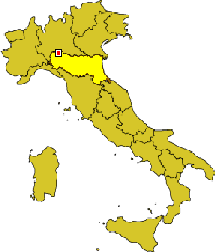 Singer-composer Corrado Pavesi-Negri brought a wealth of life experience to his art. He had studied jurisprudence at the University of Parma and he also fought in the wars of Italian independence. He had a talent for learning different languages and he traveled a great deal in Europe.
Pavesi-Negri studied music and singing with Giovanni Quacquerini, Giovanni Rossi and Amilcare Ponchielli. He was made a master composer in the Academia Filarmonica of Bologna in 1877, and he wrote and published a biography of singer Rosmunda Pisaroni.
Pavesi-Negri lived in Florence, Italy for 36 years, where he concentrated his efforts as a singing teacher, producing some of the more accomplished students of his day, including Italo Cristalli, Angelo Masini, Amedeo Bassi, Enrico Ventura and Nunzio Rapisardi. Pavesi-Negri himself was also known to be a fine baritone singer who gave some beautiful performances during his lifetime.
Eventually he retired to his hometown of Piacenza, Italy, where he was a great support to the Musical High School there. He left his entire library to them after his death.
Saturday, November 25, 2006
Amilcare Ponchielli (1834-1886)

Ponchielli suffered in his early career because he was ill-equipped to negotiate the politically driven, back-biting world of the established music societies of his day and the wealthy bourgeoisie which controlled them. For a time he was forced to take whatever work he could find, taking jobs such as band leader in Piacenza and in Cremona. He was known among his peers to be a man of absolute honesty and moral rectitude. He believed that success in any musical career should be based solely on true ability and professionalism and a true love of the art.
Ponchielli was known to feel strongly against any pressure from the impresario who employed him to make his compositions too complicated. He was a proponent of simple, straightforward melody and clarity that was not bogged down in confusion. He was a contemporary of Giuseppi Verdi, who mourned the occasion of Ponchielli’s death, saying the world has lost "a worthy man and a most distinguished artist."
Amilcare Ponchielli was the teacher of Giacomo Puccini, Pietro Mascagni and Corrado Pavesi-Negri.
Tuesday, November 21, 2006
A “Method” based on sheer MADNESS!
Having new physiological information about the way the human voice works was a temptation for many who believed that they could also dissect and cut into separate pieces the way that the art of singing works. In so doing, they only managed to cheapen the art. Whenever mere human beings try to outsmart nature, they always run into trouble. Nature will always be a far better teacher than technology.
Throughout all of history the craft of singing was passed down from singer to singer through personal contact between teacher and student. No textbooks, no diagrams, no impersonal lectures or videos could take the place of a true and personal lineage of authentic teaching in the art of singing. And this manner of personal study with a teacher over the course of several years managed to produce the greatest singers that the world has ever known. The traditional way of teaching wasn’t broken. It didn’t need to be “fixed.”
 The traditional singing teachers were called professori. They patiently guided their students to VOCAL FREEDOM– to the point where the student was freely and effectively expressing the true art of singing with his or her own unique, unadulterated and healthy voice. However, this was done in a holistic, natural way that was designed to draw out the true artistry within each singer.
The physical facts were indeed present: When a singer had true VOCAL FREEDOM, the singer’s breath, vocal cords and resonators were operating in effortless synchronicity with one another and the singer could move about the full register of his or her true and natural voice without stumbling at the “bridge” (in Italian “passagio”). But because the singer achieved his or her own VOCAL FREEDOM through a patient, balanced and holistic study guided by a professori, the physiology never got in the way of the artistry.
It was a grave mistake to believe that a contrived artificial technology forced upon the physiology of the singer’s body could provide a quicker and easier way to become an accomplished singer. The harbingers of this “scientific” approach to singing called themselves maestros (masters) and their teaching was called “method teaching.” They invented separate “exercises” purportedly aimed at the breathing, the vocal cords, the vocal range, and so forth, and they became so anxious to “produce results” in a short amount of time that they trained young singers to push and force their voices in unnatural ways.
Throughout all of history the craft of singing was passed down from singer to singer through personal contact between teacher and student. No textbooks, no diagrams, no impersonal lectures or videos could take the place of a true and personal lineage of authentic teaching in the art of singing. And this manner of personal study with a teacher over the course of several years managed to produce the greatest singers that the world has ever known. The traditional way of teaching wasn’t broken. It didn’t need to be “fixed.”
The physical facts were indeed present: When a singer had true VOCAL FREEDOM, the singer’s breath, vocal cords and resonators were operating in effortless synchronicity with one another and the singer could move about the full register of his or her true and natural voice without stumbling at the “bridge” (in Italian “passagio”). But because the singer achieved his or her own VOCAL FREEDOM through a patient, balanced and holistic study guided by a professori, the physiology never got in the way of the artistry.
It was a grave mistake to believe that a contrived artificial technology forced upon the physiology of the singer’s body could provide a quicker and easier way to become an accomplished singer. The harbingers of this “scientific” approach to singing called themselves maestros (masters) and their teaching was called “method teaching.” They invented separate “exercises” purportedly aimed at the breathing, the vocal cords, the vocal range, and so forth, and they became so anxious to “produce results” in a short amount of time that they trained young singers to push and force their voices in unnatural ways.
Subscribe to:
Posts (Atom)