Having new physiological information about
the way the human voice works was a temptation for many who believed that they could also dissect and cut into separate pieces
the way that the art of singing works. In so doing, they only managed to cheapen the art. Whenever mere human beings try to outsmart nature, they always run into trouble. Nature will always be a far better teacher than technology.
Throughout all of history the craft of singing was passed down from singer to singer through personal contact between teacher and student. No textbooks, no diagrams, no impersonal lectures or videos could take the place of a true and personal lineage of authentic teaching in the art of singing. And this manner of personal study with a teacher over the course of several years managed to produce the greatest singers that the world has ever known. The traditional way of teaching wasn’t broken. It didn’t need to be “fixed.”
The traditional singing teachers were called
professori. They patiently guided their students to VOCAL FREEDOM– to the point where the student was freely and effectively expressing the true art of singing with his or her own unique, unadulterated and healthy voice. However, this was done in a holistic, natural way that was designed to draw out the true artistry within each singer.
The physical facts were indeed present: When a singer had true VOCAL FREEDOM, the singer’s breath, vocal cords and resonators were operating in effortless synchronicity with one another and the singer could move about the full register of his or her true and natural voice without stumbling at the “bridge” (in Italian “
passagio”).
But because the singer achieved his or her own VOCAL FREEDOM through a patient, balanced and holistic study guided by a professori, the physiology never got in the way of the artistry.
It was a grave mistake to believe that a contrived artificial technology forced upon the physiology of the singer’s body could provide a quicker and easier way to become an accomplished singer. The harbingers of this “scientific” approach to singing called themselves
maestros (masters) and their teaching was called “
method teaching.” They invented separate “exercises” purportedly aimed at the breathing, the vocal cords, the vocal range, and so forth, and they became so anxious to “produce results” in a short amount of time that they trained young singers to push and force their voices in unnatural ways.
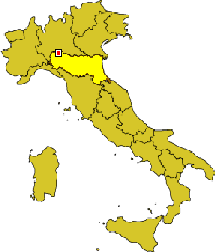 Singer-composer Corrado Pavesi-Negri brought a wealth of life experience to his art. He had studied jurisprudence at the University of Parma and he also fought in the wars of Italian independence. He had a talent for learning different languages and he traveled a great deal in Europe.


